What Is an eBOL? A Guide to Electronic Bills of Lading
 Roman Reynebeau|Founder, Matilda Technologies|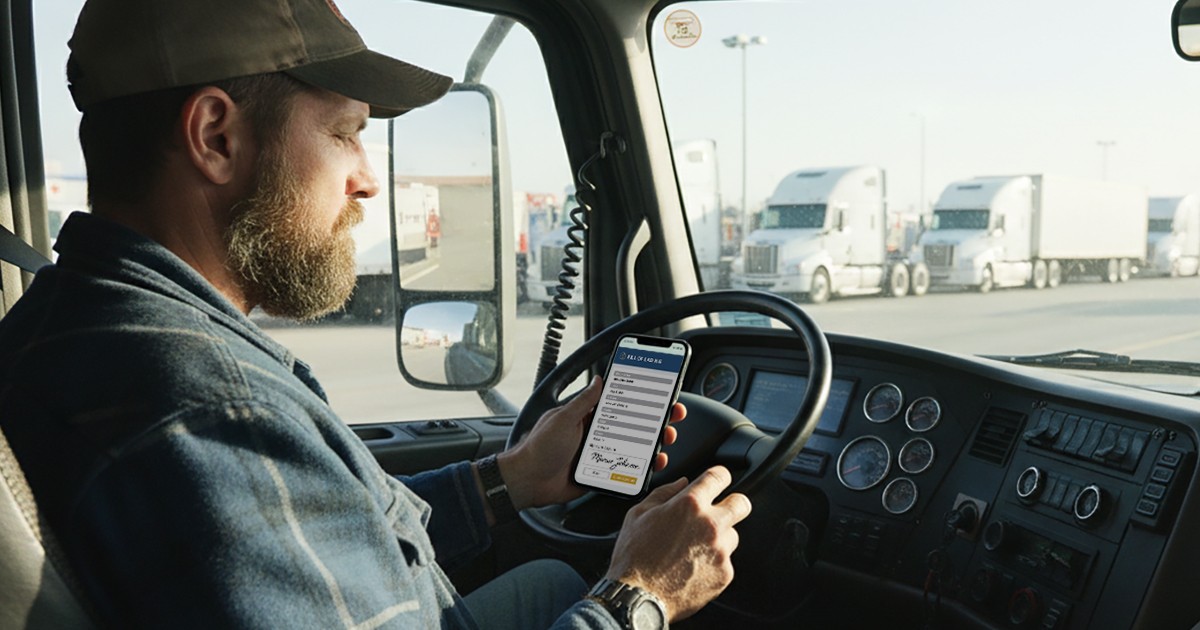
If you work in logistics or distribution, you've handled thousands of bills of lading. They're the backbone of every shipment, serving as a legal receipt that helps transfer ownership and liability between parties. And for many operations, they're still on paper.
An electronic bill of lading, or eBOL (sometimes called a digital bill of lading or digital BOL), is the digital version of that same document. It carries the same legal weight and serves the same functions, but it's created, signed, transmitted, and stored electronically. No printing, no scanning, no filing cabinets.
Why the shift from paper to digital?
Paper bills of lading have worked for decades, but they come with friction that most teams have simply learned to live with. Drivers wait at docks while paperwork gets sorted. Documents get lost, damaged, or become illegible. Admin staff spend hours scanning, faxing, and filing. And when a dispute or audit comes up, someone has to dig through boxes or filing cabinets to find the right document. For a detailed breakdown of where those costs actually land, read our post on the true cost of paper BOLs in a distribution center.
An eBOL eliminates all of that. The document is created digitally, signed on a mobile device or kiosk, and stored in the cloud where it's instantly searchable. Every stakeholder in the supply chain, whether shippers, carriers, or consignees, can access the document they need, when they need it, without a phone call or an email.
What are the benefits of an eBOL?
The most immediate benefit is speed. When drivers can sign digitally at the dock, the entire check-in and check-out process gets faster. That translates directly into shorter dwell times and lower detention fees. For a side-by-side look at how paper and digital compare across speed, accuracy, and cost, see our eBOL vs. paper BOL comparison. This is especially impactful for LTL operations, where a single trailer can carry 30 or more bills of lading. Rather than signing each one individually, a driver can sign once and have their signature applied across all BOLs on that load. To see what this looks like in practice, watch how ABW achieved paperless eBOL operations.
Accuracy is another major benefit. Paper BOLs are prone to errors, whether it's illegible handwriting, missing fields, or incorrect shipment details. And when it comes to signatures, ink on paper can be difficult to read or verify after the fact. An eBOL replaces ink signatures with typed signer names and timestamps, making it clear who signed and exactly when. That level of clarity strengthens enforceability and eliminates ambiguity when disputes arise. Beyond signatures, an eBOL enforces data consistency across the entire document and eliminates the manual entry that introduces mistakes. When billing and claims are tied to accurate documentation, disputes drop and payments move faster.
Compliance also gets easier. Every eBOL comes with a built-in audit trail that records who signed, when they signed, and what changed. When an audit hits, you're not scrambling for documentation. It's all there, timestamped and organized. That same audit trail also provides defense against fraud. Paper BOLs can be scanned, altered, and reprinted to hide a shorted load, and the theft often goes unnoticed for weeks. We cover how these schemes work in our guide to freight fraud.
And then there's cost. Paper, printing, storage, and the labor to manage it all adds up. Going digital removes those line items entirely and frees up your team to focus on higher-value work.
Is an eBOL legally valid?
Yes. Electronic bills of lading meet federal and state requirements for shipping documentation, including electronic signature capture. The legal framework for electronic trade documents has matured significantly in recent years, and eBOLs are widely accepted across the logistics industry.
One exception worth noting: hazmat shipments still require a physical copy of the bill of lading. However, modern eBOL platforms can handle this by automatically generating and printing the physical document where required, so your team doesn't have to maintain two separate processes.
What should you look for in an eBOL solution?
Not all eBOL platforms are the same. When evaluating options, there are a few things worth considering.
First, think about how drivers will interact with the system. The best solutions offer multiple options, such as mobile devices for speed and self-service kiosks at the dock for flexibility. If drivers need to download an app or create an account, that's friction that can slow adoption.
Second, look at how the platform handles signatures. Digital signature capture should be simple, fast, and legally compliant. For operations where a single driver may have dozens of BOLs per load, the ability to sign once for multiple documents is a meaningful time saver.
Third, consider integration. Your eBOL solution should connect with your existing WMS, TMS, and ERP systems so data flows automatically rather than requiring manual re-entry. For a deeper look at how these integrations work, read how eBOL connects to your WMS, TMS, and YMS.
Finally, think about compliance and audit readiness. Every document should have a complete, tamper-proof audit trail. And for operations that handle hazmat, make sure the platform can accommodate physical document requirements without creating a separate workflow.
The bottom line
The bill of lading has been around for centuries. The paper version served its purpose, but it's now one of the biggest sources of inefficiency at the dock. Whether you call it an eBOL, an electronic BOL, or a digital bill of lading, the concept is the same. It doesn't change what the document does. It changes how fast, how accurately, and how easily your team can manage it.
If you're still running on paper and considering the switch, see how M.Folio by Matilda Technologies approaches eBOL and what a digital bill of lading process looks like in practice.
Roman Reynebeau
Founder, Matilda Technologies
Roman Reynebeau is a software engineer turned founder with nearly two decades of experience building technology for supply chain and fulfillment. Before founding Matilda Technologies, he held leadership roles at Accenture, MacGregor Partners, and Blue Yonder. He was named a Supply & Demand Chain Executive Pro to Know in 2022.